
Crypto customers win 8% of the time
When a dispute with a crypto exchange reaches an arbitrator, the customer wins about 8% of the time. Nine in ten cases never get that far. Our tally of 1,617 filings through 2026.

Open a Coinbase or Kraken account and you sign away your right to sue. The user agreement routes any dispute into private arbitration: one customer against one company, in front of a paid arbitrator, no class action and no jury. Crypto firms defend those clauses hard, and Coinbase has carried the fight to the Supreme Court twice. What nobody had tallied is what happens after the clause does its job and a case goes to arbitration.
So we built the ledger. Arbitration providers have to publish their consumer cases under a California disclosure law, so we took the two big ones, the American Arbitration Association and JAMS, pulled the files, filtered to crypto companies by hand, and counted outcomes across 1,617 cases closed through early 2026. The figures below are our count of those disclosures; neither provider publishes a number like this on its own.
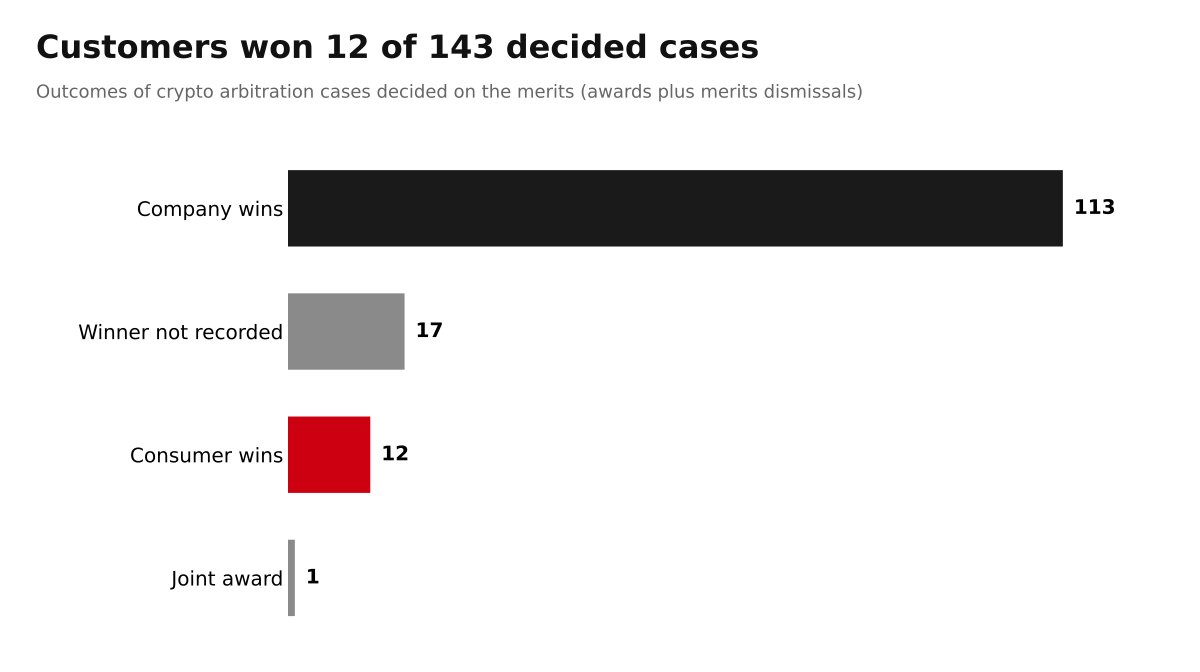
When a crypto case is decided on the merits, the customer wins about 8% of the time. Twelve wins out of 143 rulings. The company takes 113, one award goes both ways, and 17 rulings never record a winner. Eight percent sounds low, and it is, but it sits above consumer arbitration generally: a plaintiffs'-bar study found customers won money in under 2% of AAA consumer-finance cases.
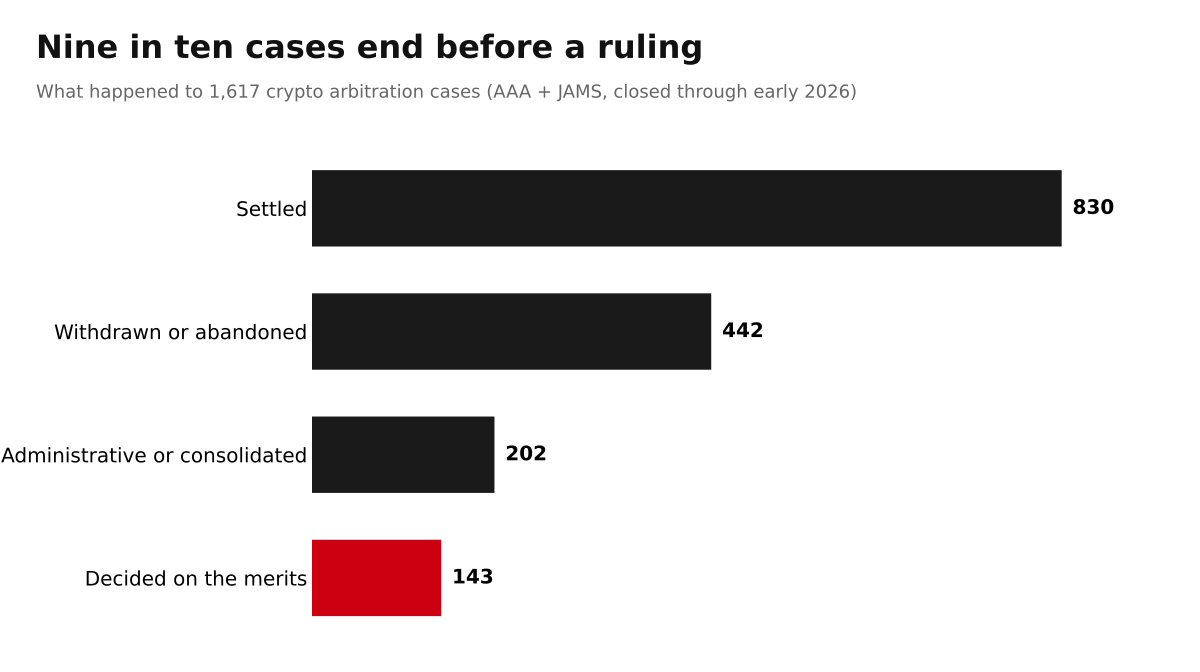
The merits number buries the bigger one, the denominator. Only 143 of those 1,617 cases ever reached a ruling. The rest fell out along the way: 830 settled, 442 were withdrawn or abandoned, and 202 closed on administrative grounds. A customer who files has roughly a one-in-eleven shot at a decision, and if they get one, about a one-in-twelve shot at winning it. Counted against every filing, customers won under 1%, because nine in ten cases end before anyone rules.
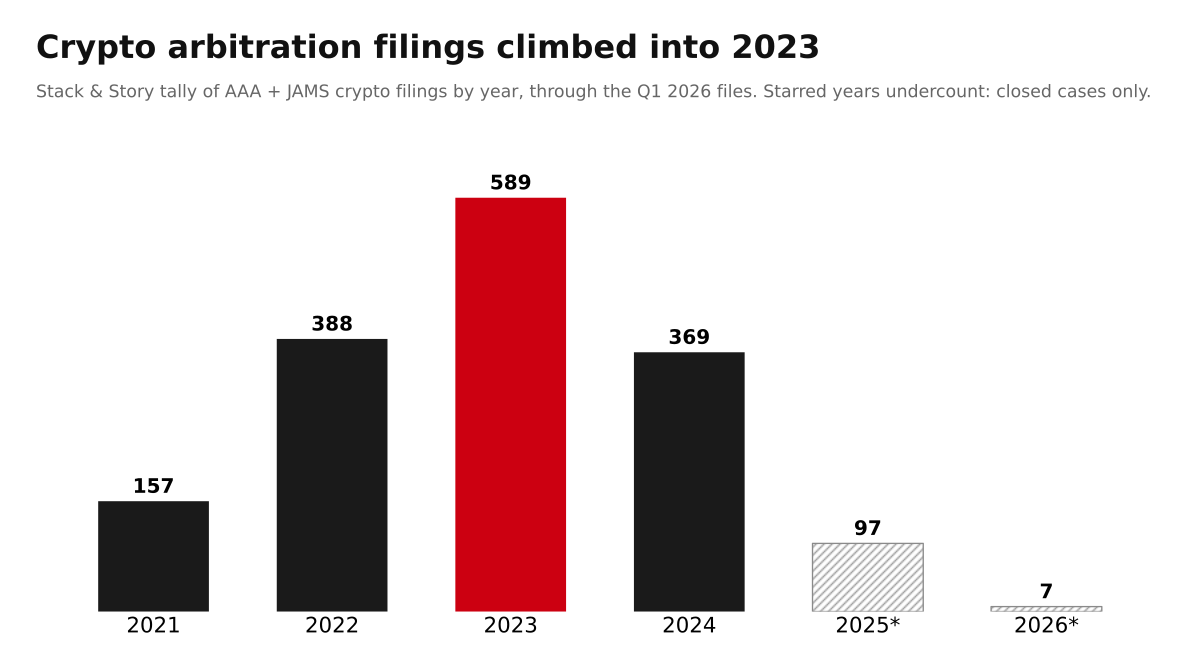
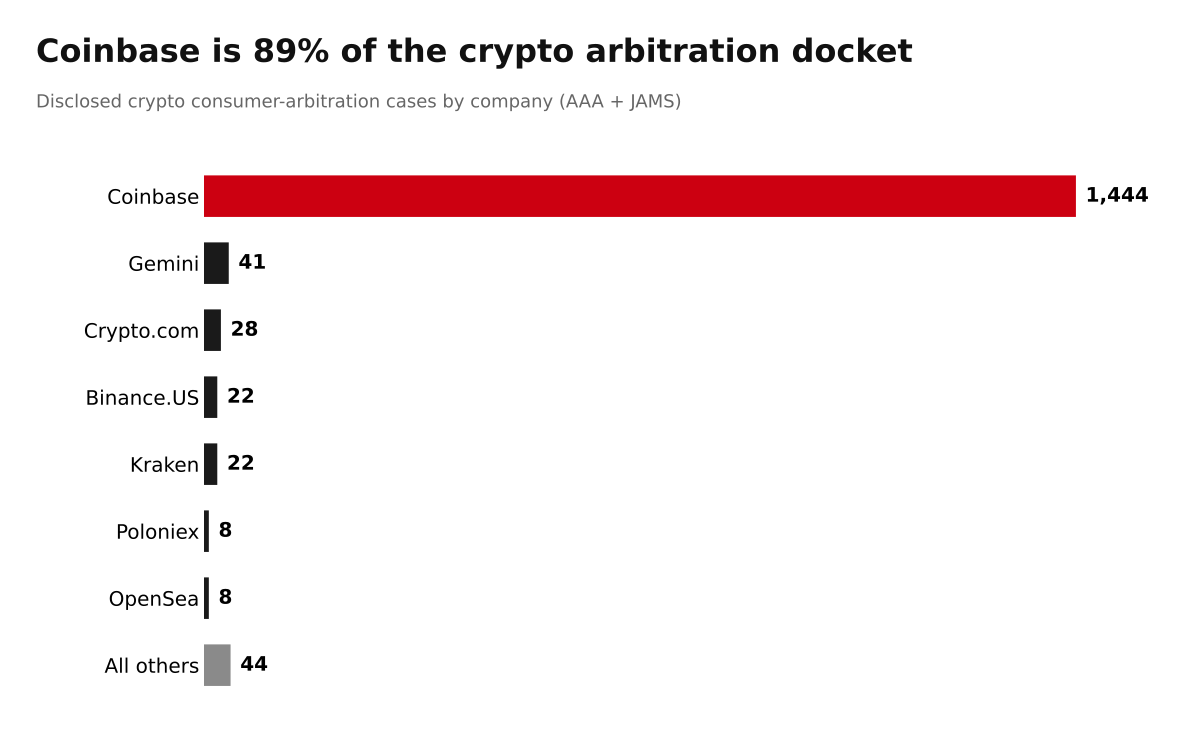
One company is almost the whole dataset. Coinbase accounts for 1,444 of the 1,617 cases, 89% of everything and 95% of the AAA docket, and seven of the twelve customer wins. That's partly its size and partly a mass-arbitration wave. In the disclosed files, crypto filings climbed from 157 in 2021 to 589 in 2023, then read lower for 2024 and 2025. Read that decline with care: the disclosures only cover closed cases, so the newest filing years are undercounted while the older ones are close to complete. What's solid is the run-up into 2023, and that a fresh batch is now forming.
The rest of the field is a rounding error, with Gemini at 41 cases, Crypto.com at 28, Kraken and Binance.US at 22 each, and NFT and wallet firms like OpenSea and MetaMask maker ConsenSys in single digits. Two entries are worth flagging. Circle, the USDC issuer, turns up in the JAMS data, an unusual entry for a stablecoin issuer whose agreement sends disputes there. And Poloniex, a mid-tier exchange with just eight cases, matters far more than its docket size suggests.
When customers do win, the checks are real. The eleven monetary awards in the files total $4.62 million, plus $1.61 million in attorney fees, running from $2,500 to $2.39 million with a median near $85,000. The two largest belong to Poloniex: a $2,385,254 award closed in January 2024 and an $844,512 award closed in April 2021, both won by specialist crypto law firms. Coinbase's turn came in December 2025, when the Chicago firm Stoltmann Law won two account-takeover awards for customers whose accounts were drained; the second came to $521,612 plus $95,603 in fees. Stoltmann billed its win as the first successful recovery for a company failing to protect an account, and for Coinbase it was, but the files show crypto customers had collected bigger checks years earlier. Those are the exceptions. With the company winning 113 of 143 decided cases, the tail is real. It's just rare.
The strange part is how cheap it is to try. Consumers paid none of the arbitrator's fees in the AAA crypto cases; the company covers them. The customer's only cost is a filing fee capped at $225 at the AAA and $250 at JAMS. Cheap to enter, long odds once you're in. That math is exactly why mass arbitration works as pressure: file a thousand $225 claims and the company owes millions in fees before a single case is heard, which is a strong reason to settle and never show up in the win column. In our count, one Coinbase docket line carries 10,491 batch filings that never proceeded.
The limits are worth stating plainly. These figures are our own tally of the AAA and JAMS consumer-case disclosure files, filtered to crypto respondents by hand; "crypto" isn't a field in the data, so the classification is a judgment call. We count crypto-native firms and leave out payment apps with crypto features (Block's Cash App alone would add about 200 cases) and self-directed IRA custodians whose customers lost crypto. Employment disputes and duplicate rows for co-respondents are removed. The files cover only cases closed in the last five years, which undercounts the newest filing years and trims the oldest. California's law only captures cases with a California nexus, so national volumes are larger. The 8% is a win rate on merits rulings, counting awards plus merits dismissals; score only the awards that name a winner and it rises to 17%. Settlements disclose no dollar terms, so none of this measures who walked away with money. A single case row can also hide a whole batch, so the case count understates the number of actual claimants.
Arbitration clauses get sold as the neutral, faster alternative to court. In our count the record reads plainer than that: a venue where nine in ten disputes evaporate before a decision, and the rulings that name a winner go against the customer nine times out of ten. A fresh wave is already forming around Coinbase's May 2025 data breach. Anyone who signs up to an exchange agrees to these odds. Most never read the clause that sets them.
Method and sources
Built from our own tally of the AAA (Q1 2026 case file) and JAMS (July 2026 file) consumer data