
Where the Two Billion Went
813,294 wallets lost $2.0 billion on the TRUMP token. The family took about a third, 58 wallets more than half. Every estimate, one page.

The president's family was not the only big winner of its own memecoin. By the best available count, it was not even the biggest.
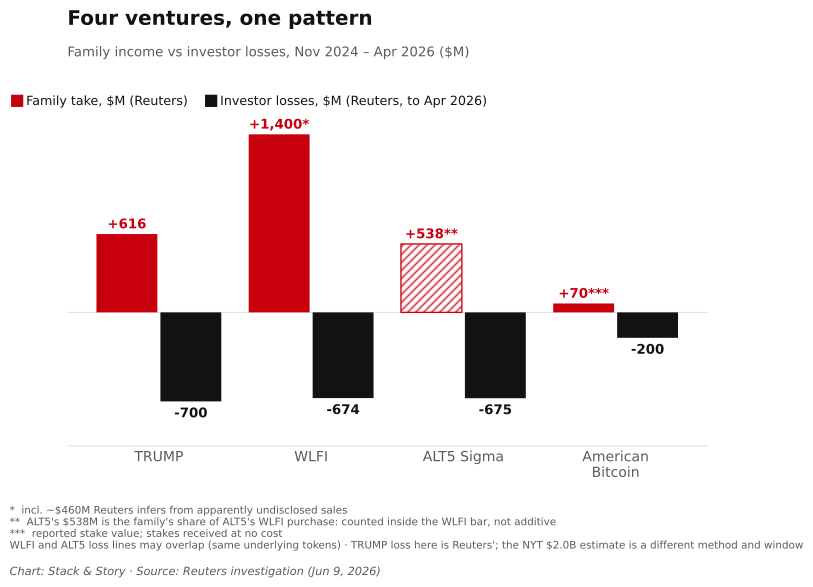
The 927-page financial disclosure released by the U.S. Office of Government Ethics on June 30 puts a signed number on the Trump crypto year for the first time: at least $1.4 billion across four line items, including $635 million in memecoin royalties paid through CIC Digital LLC (NBC News, Bloomberg). A Reuters investigation published June 9 counted roughly $2.3 billion of family income against roughly $2.25 billion of investor losses across four ventures.
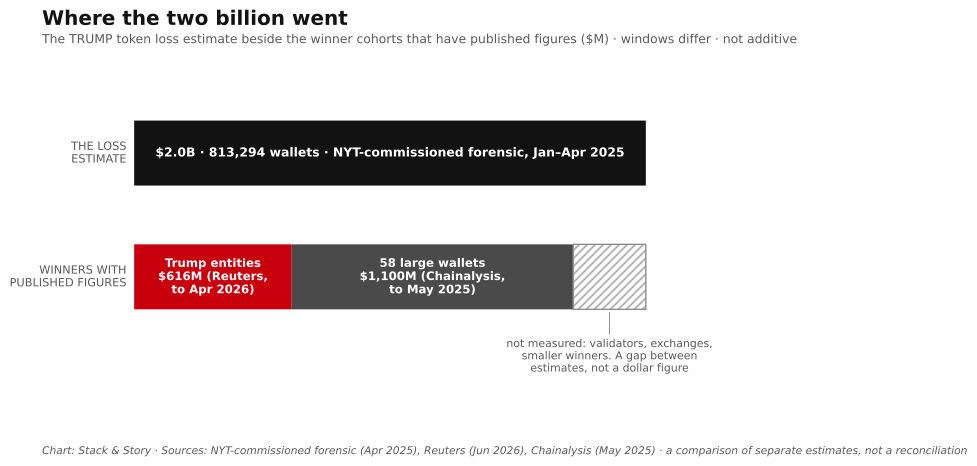
Those numbers answer one question and raise a better one. If the family's cut is only part of what came out of these markets, who took the rest? We collected every published estimate of a winner cohort and put them against the loss figures on one page. To be clear about what this is: a comparison of separately measured estimates, from different windows and methods. It is not an audit, and the numbers do not add up to a closed ledger. They are not supposed to. What they show is proportion.
The loss pool
A forensic analysis commissioned by The New York Times found that 813,294 wallets lost a combined $2.0 billion trading the TRUMP token between its January 17, 2025 launch and late April 2025, mixing realized losses with paper losses on coins still held. Reuters, on a longer window through April 2026 and its own method, puts TRUMP investor losses above $700 million, and losses across all four family ventures near $2.25 billion: more than $700 million on TRUMP, about $674 million on WLFI, about $675 million on ALT5 Sigma shares, and over $200 million on American Bitcoin stock. The two TRUMP figures measure different things over different periods; they sit side by side here, never added.
One more caution on the $2.25 billion: the ALT5 and WLFI lines overlap. ALT5's share collapse traces to the $717 million of WLFI tokens on its balance sheet, so some of the same destroyed value may appear in both lines. Reuters presents them separately; so do we, with that flag attached.
Chainalysis adds a detail about who the losers were: about half of all TRUMP buyers were first-time Solana users, which suggests many arrived for this one trade.
The winners that have been measured
Two winner cohorts have published dollar figures attached.
The family entities took roughly $616 million from the memecoin business per Reuters, out of about $1.2 billion of total project revenue its blockchain analysis identified. The royalty mechanism collects on trading volume in both directions, so entries and exits alike paid the house. The disclosure's own $635 million royalty line for calendar 2025 lands within sight of the Reuters estimate, a rare case of two methods converging.
Fifty-eight wallets made more than $10 million each, about $1.1 billion combined, per Chainalysis through May 2025. Against the NYT loss estimate, the family's take is about a third of the pool and the 58 wallets are more than half, with the usual caveat that the windows differ by a year.
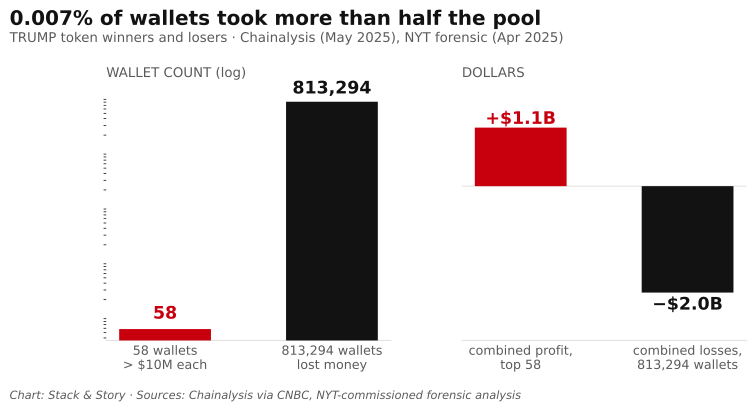
The best-documented member of the 58 is a trader Bubblemaps calls "Naseem": a fresh wallet funded with just over $1 million four hours before the launch announcement, buying within 30 seconds of the tweet, exiting with about $109 million. Separately, Bloomberg's analysis reported trading patterns consistent with some participants positioning before the public announcement. Nobody has connected the two: there is no public evidence that this trader had inside information, and Bubblemaps has not alleged it.
Beyond those two cohorts, the winners are real but unquantified. Solana's network-wide fee revenue hit an all-time daily high of $56.9 million on January 19 per Helius, with validators collecting over 100,000 SOL, roughly $25 million at the time, in fees and tips across two days; how much of that traces to TRUMP specifically has not been isolated. Exchange revenue from the token has never been broken out, though Robinhood reported crypto revenue up 700 percent year over year the month after listing it. These lines belong in the picture as categories, and we chart them as unmeasured, not as numbers.
A footnote that needs no accounting: Trump's 2026 filings disclose purchases of Coinbase and Robinhood stock. Whatever the exchanges earned from his token's order flow, the disclosing party now holds their equity.
The WLFI machine, and why its two numbers both make sense
World Liberty Financial raised $1.4 billion selling 30 billion governance tokens, and the family is entitled to 75 percent of token-sale proceeds. Reuters counts about $987 million to the family from disclosed sales, including a $538 million share of the $717 million that ALT5 Sigma spent on WLFI tokens. Then it found something stranger: an October 2025 filing under Europe's crypto rules showed the project holding 3 billion fewer tokens than it had reported a month earlier. Pricing those apparently undisclosed sales at prevailing rates, Reuters estimates at least $460 million more, bringing the family's WLFI total above $1.4 billion. Duke finance professor Campbell Harvey reviewed the finding and said it appears the insiders were dumping; a WLF spokesman said the company does not validate third-party methodologies.
Here is the question a careful reader should ask: how can the family collect $1.4 billion while WLFI holders lost only $674 million? Because the two numbers measure different things, and the gap is the mechanism. Presale tokens sold at $0.015 and $0.05; the token trades near $0.059 today, so early tranches are not underwater on price. The losses concentrate where the buying was late and expensive, and above all in what holders cannot do: since launch, most early holdings have been locked, an April 2026 governance vote extended restrictions on ordinary holders to 2030, and Reuters describes locked positions as effectively total losses for the buyers who hold them. The $674 million is less a price loss than a liquidity loss. The Democracy Defenders Fund has asked the SEC to examine the lockup vote.
The largest outside backer illustrates it. Justin Sun put about $75 million into WLFI; 540 million unlocked and 2.4 billion locked tokens attached to him were frozen through an administrative blacklist function, his position fell from a peak near $107 million toward $43-60 million, and he is suing in federal court. His separate SEC enforcement case settled this year for $10 million. Those are the facts; we draw no line between them.
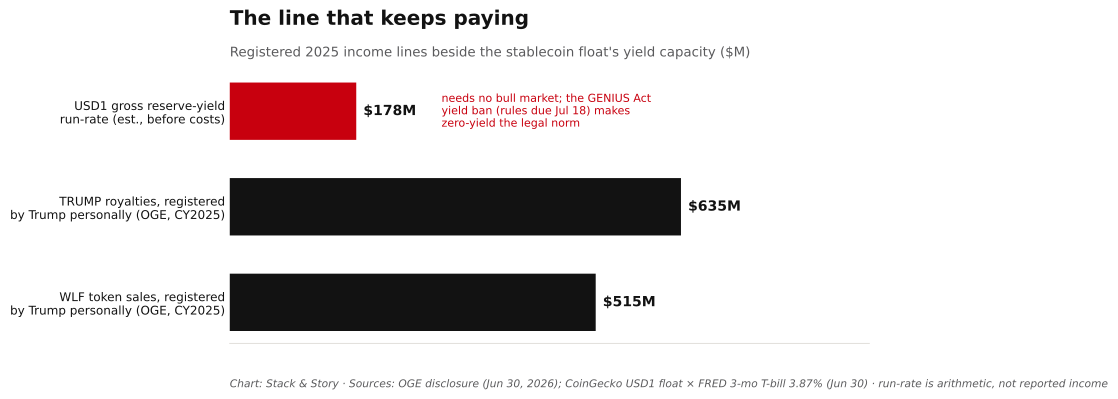
One line item in the disclosure needs no price cycle at all. The $197 million Stablecoin Holdco equity sale connects to USD1, a stablecoin with a $4.6 billion float. Its reserves sit in short-term instruments earning about the 3-month Treasury rate, 3.87 percent as of June 30, a gross reserve-yield run-rate near $178 million a year before costs, while holders earn zero. Most of the float sits with institutions: Forbes reports wallets associated with Binance hold roughly 87 percent. The GENIUS Act already bans paying yield to stablecoin holders, and the six federal agencies writing its implementing rules face a July 18 deadline; for every compliant issuer, zero-yield is becoming a legal floor rather than a business choice. That income stream survives any crash, which is where our next piece picks up.
What this comparison cannot say
The windows differ: the NYT forensic stops in April 2025, Chainalysis in May 2025, Reuters runs to April 2026. Losses mix realized and paper, and a price recovery would shrink them; paper losses in particular are evaporated valuation, and no other wallet holds them. Wallets are not people: one trader can run dozens, and one custodial wallet can hold thousands of people. Some of the 58 winners may be the same actors as the snipers and bots described elsewhere, so cohorts cannot be summed. Royalty income comes from all trading volume, winners and losers alike, so it does not map one-to-one onto the loss pool. This is a comparison of the best published estimates, labeled by source and window, and nothing more.
The defense also deserves its full weight. Nobody was conscripted; memecoins are lottery tickets and the category always produces concentrated winners. The disclosure is transparency working. Validators earn fees by design. Exchanges are neutral venues. All of that can be true. What the comparison adds is proportion: the family's registered take is about a third of the best loss estimate, a group of 58 anonymous wallets took more than the family did, and the buyers were disproportionately first-timers whose losses are locked in until 2030 in the one venture where they cannot sell.
For our ledger
A call for the record, dated July 6, 2026: by the next annual disclosure in mid-2027, cumulative registered crypto income across these ventures exceeds $2 billion, while TRUMP trades below $5 and WLFI sits below the team's own $0.1507 buyback average. We will score it in public, either way.
Correction, July 6, 2026: an earlier version of this piece described the winner comparison as a ledger that "nearly closes," presented an unmeasured residual as a dollar figure, overstated Solana validator income attributable to the token, and did not explain how the family's WLFI take and the smaller holder-loss figure coexist. The text, charts and framing above are corrected; details in the fact-check log.
Every figure above is sourced inline. Price data pulled July 2, 2026.