
Evernorth puts $648M XRP treasury to work
Evernorth plans phased XRP lending and yield deals with Ripple, Kraken, Coinbase and BitGo on a $648M treasury.
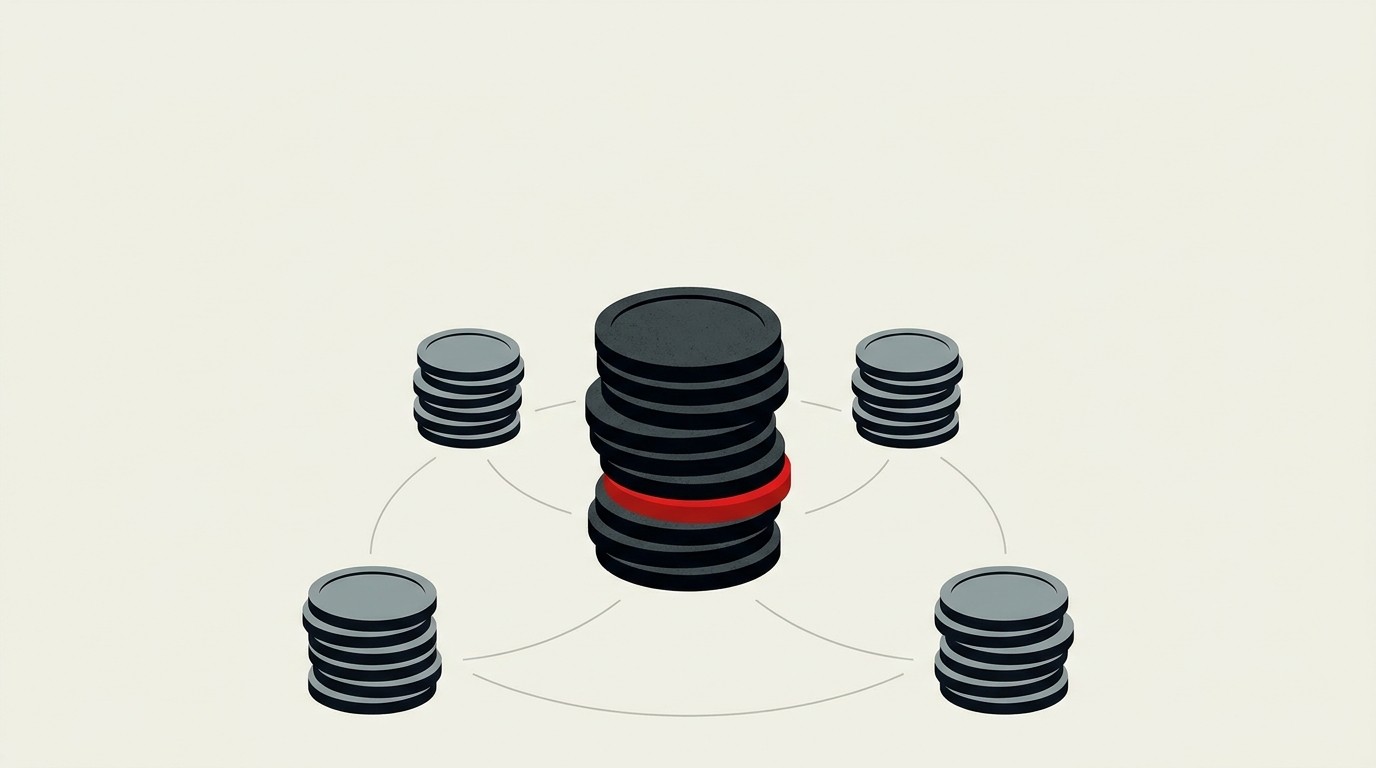
Evernorth, the XRP treasury company that listed on Nasdaq this month, said it is moving its $648 million XRP holding into lending and yield strategies. The rollout is phased, and it has lined up Ripple, Kraken, Coinbase and BitGo as counterparties.
The treasury's math
A public company holding a single altcoin as its core balance-sheet asset only works if that asset earns something while it sits there. Evernorth's filing and its public statements lay out the scale of what it is trying to activate.
- Evernorth holds roughly $648 million in XRP as its primary treasury asset, per The Block.
- The company named four counterparties for lending and custody-adjacent yield work: Ripple, Kraken, Coinbase and BitGo.
- The yield push follows Evernorth's Nasdaq debut earlier this month, putting the treasury under public-market reporting rules for the first time.
- XRP itself carries no native staking yield, unlike proof-of-stake assets, which is why Evernorth needs third-party lending desks to generate return.
What the yield push actually signals
The default read calls this a diversification move: a treasury company spreading counterparty risk across four well-known names. The more useful read is about XRP's structural problem as a balance-sheet asset.
XRP has no staking mechanism. Holding it generates zero yield unless someone lends it out, stakes it on a yield-bearing wrapper, or deploys it into a trading desk's book. Evernorth can't just sit on $648 million and collect a return the way an ETH treasury company can through native staking.
That forces Evernorth into counterparty risk it wouldn't otherwise need. Lending XRP to Kraken or Coinbase means trusting those platforms' credit and liquidity management, the same risk that sank Celsius and BlockFi lenders in 2022 when crypto lending desks froze redemptions.
Four counterparties isn't really diversification if all four face the same macro liquidity shock at once. It's a bet that none of them do.
The Nasdaq listing raises the stakes on that bet. Public shareholders now have a claim on how Evernorth manages treasury risk, and a lending blowup at any one of Ripple, Kraken, Coinbase or BitGo becomes a disclosed, market-moving event rather than a private-company footnote.
Ripple's inclusion is the more telling detail. Ripple isn't a neutral lending venue, it's the issuer tied to XRP's own supply and legal history.
Routing treasury yield through the asset's own issuer concentrates, rather than diversifies, the risk this structure is supposed to spread. It also means Ripple has a direct commercial interest in Evernorth's treasury performing well, which cuts against the independence a public-market investor would want from a lending counterparty.
What would confirm or kill this
The strategy is a bet that XRP lending yield can be generated safely across four counterparties without concentrating risk back into a single point of failure. A few concrete things would tell the market whether that bet is paying off.
- Evernorth's next 10-Q or equivalent filing disclosing actual yield rates earned and the dollar allocation across each of the four counterparties.
- Any public counterparty, especially Kraken or Coinbase, disclosing a material change in XRP lending terms, caps or suspension.
- Ripple's own disclosed commercial relationship with Evernorth, including whether Ripple earns fees as a counterparty distinct from its role as issuer.