
Ledger implant pushes bulls toward ETFs
A hardware implant tied to $86M in losses has Bitcoin holders rethinking cold storage versus custody.
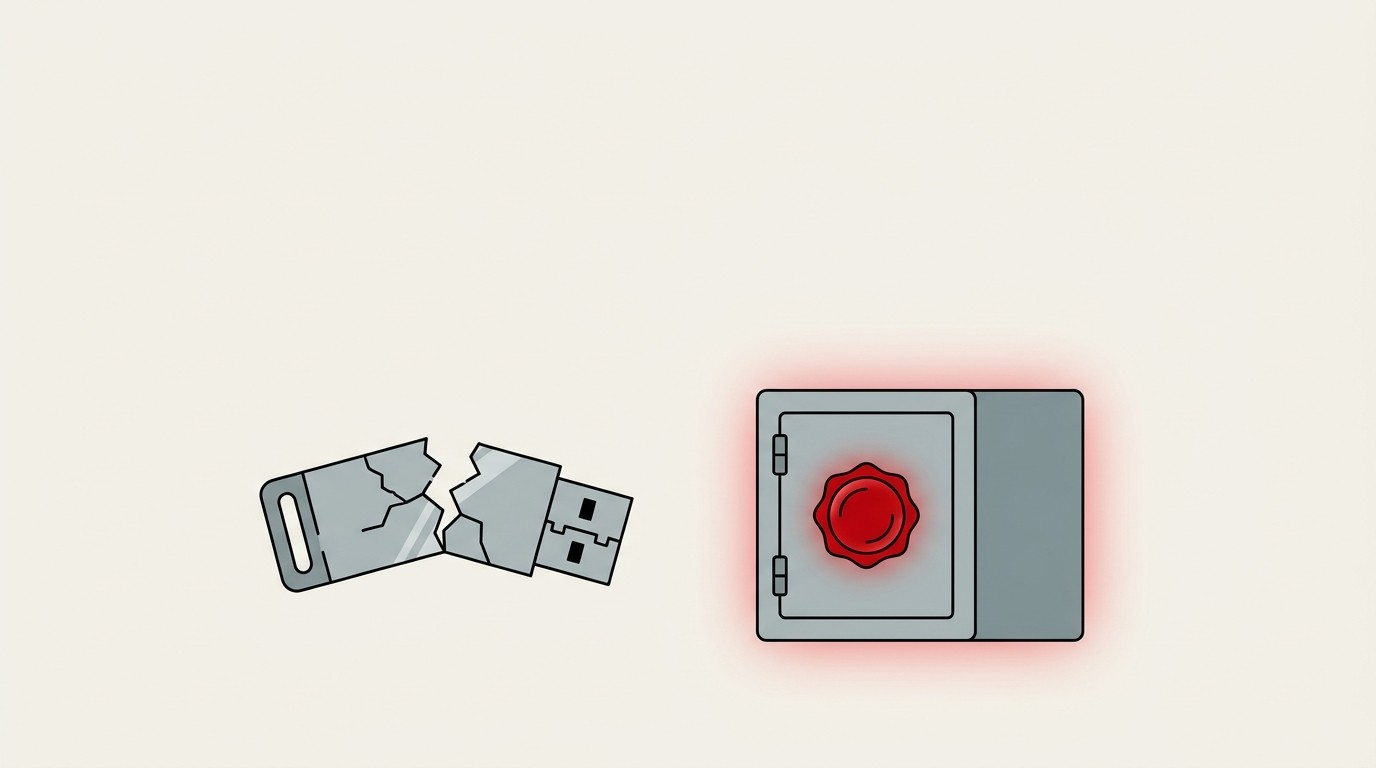
A compromised Ledger device turned up with an unauthorized hardware implant inside it, and blockchain investigators now estimate associated losses could top $86 million. The discovery has restarted a years-old argument: is self-custody still the safer bet, or have Bitcoin ETFs quietly become the better option for people who don't want to think about firmware.
The exploit and the numbers
Bitcoin analyst Plan B, who moved his holdings into ETFs in 2025, called the decision "zero regrets" after the Ledger and Coldcard exploits surfaced. The exploit itself wasn't a one-off headline either; a related Coldcard phishing incident hit the same news cycle days earlier.
- Losses from the Ledger hardware implant could exceed $86 million, per blockchain investigators.
- Coldcard confirmed it's investigating how a phishing link appeared on its official X account on Oct. 11, 2026.
- Ledger separately disclosed fund losses tied to a Southeast Asian reseller on Oct. 9, 2026.
- Strategy added 250 BTC that same week, pushing its holdings to 848,250 BTC, all presumably self-custodied or custodied via a third party, not retail hardware wallets.
Three incidents, one week, one brand. That's not noise, that's a pattern showing up in the filings and the timeline at once.
What the default take misses
The obvious read is that hardware wallets failed and ETFs win by default. 21Shares co-founder Ophelia Snyder leaned into exactly that framing, telling Cointelegraph that large holders have converted to ETFs for "enhanced security" for years and that this is one of the product's core selling points.
That framing skips the actual failure mode. The implant and the phishing link aren't flaws in the cryptography of self-custody. They're supply-chain and social-engineering attacks, the kind that exploit a reseller's shipping process or an X account's login, not the seed phrase itself.
Adam Back made this point directly: hardware wallet manufacturers have had a decade to build proper threat models for generic attacks and "surprisingly few" did. That's a vendor-maturity problem, not proof that custody-by-committee is structurally safer.
Jameson Lopp's warning cuts the other way against the ETF-triumphalism read too. A mass, rushed migration off hardware wallets creates its own central point of failure, he noted, the opposite of what the "move to ETFs for safety" narrative promises.
So the real split isn't self-custody versus ETF. It's unexamined self-custody, with default settings and a reseller nobody vetted, versus either a properly threat-modeled cold wallet or a regulated custodian whose job is exactly this. Snyder's own point supports this: she said self-custody security "depends on investors' technical expertise and individual setup," not on self-custody being inherently weaker.
That's an argument for competent custody of any kind, not a referendum on which vehicle wins. ETFs centralize the risk into one counterparty; hardware wallets distribute it into however many individual setups exist. The Ledger implant proves the weak link was procurement and firmware trust, not elliptic curve math.
Signals to track
The next few months will show whether this was a vendor-specific stumble or evidence of a structural shift in how serious holders want to custody Bitcoin.
- Watch whether Ledger or Coldcard publish a revised threat model or hardware attestation process in response, the fix Back is calling for.
- Track net ETF inflows over the next 30 days against self-custody wallet shipment data, if issuers disclose it, to see if Plan B's move becomes a trend or stays anecdotal.
- Watch for additional reseller-linked compromise disclosures; a second unrelated vendor hit would confirm a supply-chain problem industry-wide, not a Ledger-specific one.