
Fourteen Open Doors
South Korea blocked 14 foreign crypto apps. Fifteen months later, 14 of 23 unregistered top exchanges still return Apple Korea listings.

South Korea told Apple to block 14 unregistered foreign crypto apps in April 2025. Fifteen months later, we checked the 25 exchanges at the top of CoinGecko's trust-score ranking against Korea's current regulatory register and both mobile storefronts.
Twenty-three of the 25 have no registration with the Korea Financial Intelligence Unit. Apple still returns a Korean App Store record for 14 of those 23.
The matching number is a coincidence. The policy gap follows from two enforcement models. Korea's 2025 action asked Apple to remove a named group of exchanges that regulators judged to be conducting unreported business toward Korean users. Google's 2026 rule goes wider: any crypto exchange app targeting South Korea must show a successful KoFIU filing. One store works from a list of targets. The other has turned registration into the gate.
The result is a mobile perimeter with different edges depending on the phone in a user's hand.
The register covers two of the top 25
KoFIU's register dated June 30 lists 28 virtual-asset service providers. Only Upbit and Crypto.com matched the CoinGecko top 25 at brand level. Coinbase, Binance, Kraken, OKX, Bitget, Gate, Bybit, KuCoin and the rest did not.
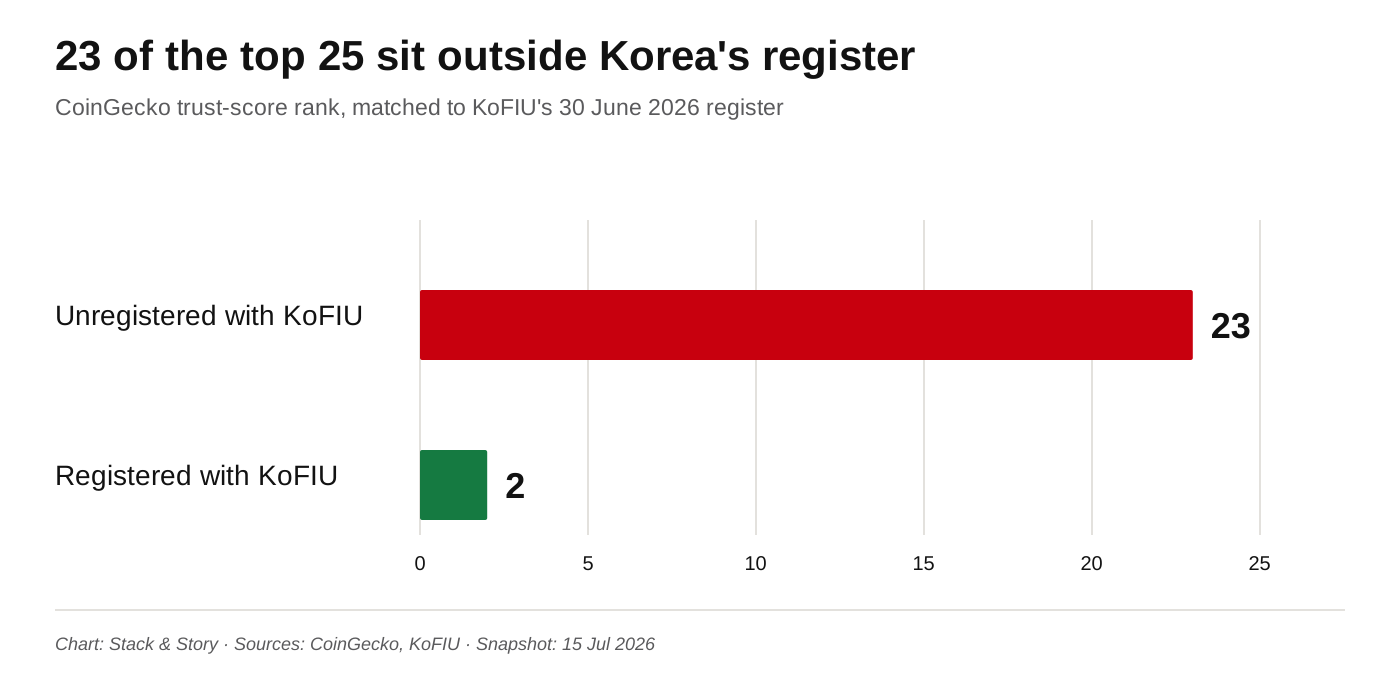
Registration status alone does not make all 23 illegal operators in Korea. Korean law looks at conduct: a Korean-language site, marketing aimed at Korean customers, won payment support and other signs that a foreign platform is doing domestic business. KoFIU warned again in June that an overseas exchange can still be treated as a domestic operator when it recruits Koreans through Telegram or KakaoTalk while keeping its formal customer service in English.
The register answers a narrower question: which brands have filed. That is also the question Google's current Play policy asks when an exchange app targets South Korea.
Apple's Korean storefront returns 14 records
We matched each exchange to its official iOS app ID and called Apple's Lookup API with country=kr. Fourteen of the 23 unregistered brands returned a Korean storefront record:
Coinbase, Binance, OKX, Bitget, Gate, Gemini, HashKey Exchange, Ourbit, Bybit, Bitunix, Bullish, Luno, LBank and BitKan.
Nine did not return a Korean listing: Kraken, Bitstamp, MEXC, Bitvavo, Bitso, BingX, KuCoin, Binance US and DigiFinex.
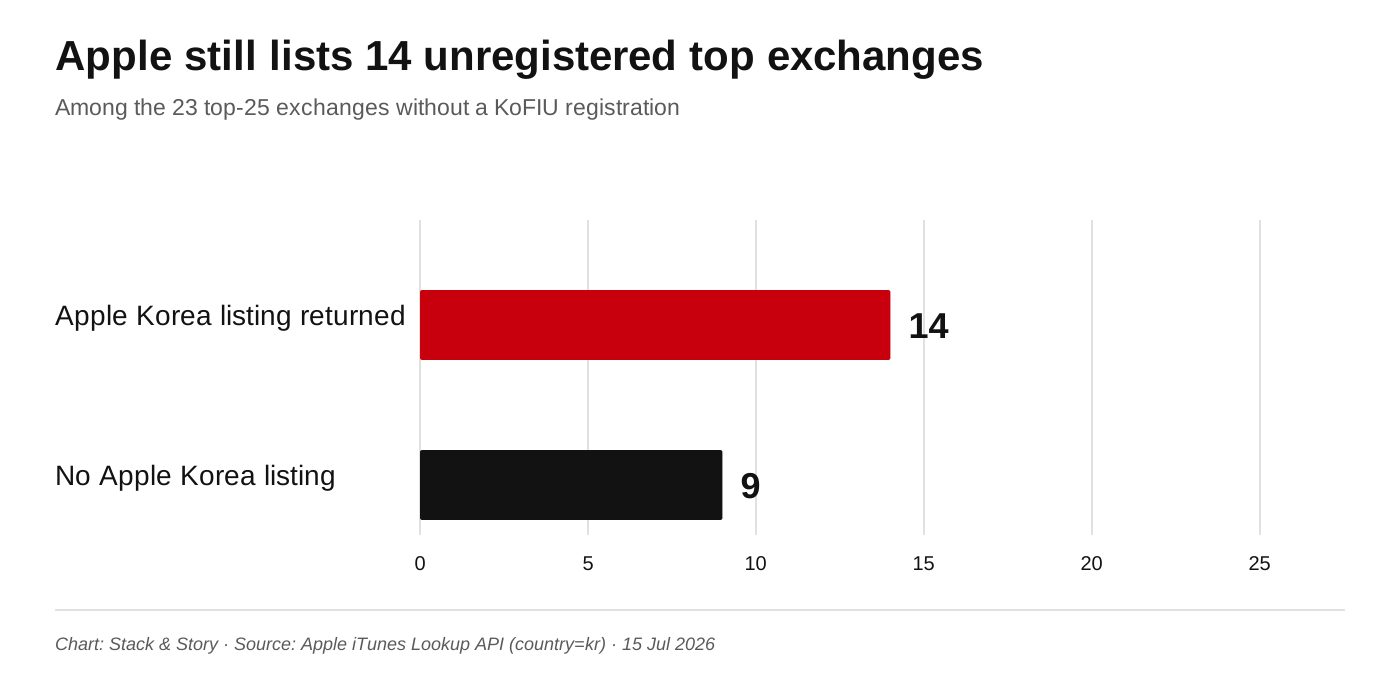
The split fits the history. In April 2025, the Financial Services Commission said Apple had blocked 14 apps at KoFIU's request, including KuCoin and MEXC. Both are absent in our current Apple check. The action was aimed at a named set of providers already judged to be targeting Korea without filing. It was never announced as a permanent rule excluding every unregistered exchange app.
That distinction leaves room for large global apps that carry no KoFIU registration and have not been placed inside the same enforcement bucket. Coinbase and Binance can return Korean storefront records while KuCoin and MEXC do not. Registration status and blacklist status are doing different jobs.
Google built a wider rule, with search traces still visible
Google's January policy says a crypto exchange developer targeting South Korea must have successfully filed a VASP report with KoFIU. The company tells developers without the required registration to remove that location from their targeting.
We ran Korean-locale Google Play searches for each of the 25 exchange names and captured every returned package ID. Seven unregistered official packages appeared somewhere in that 25-query result set: Coinbase, Binance, Kraken, OKX, Bitget, Gate and Bitunix. Kraken's package appeared under its own-name query. The other six surfaced as alternatives under another exchange query.
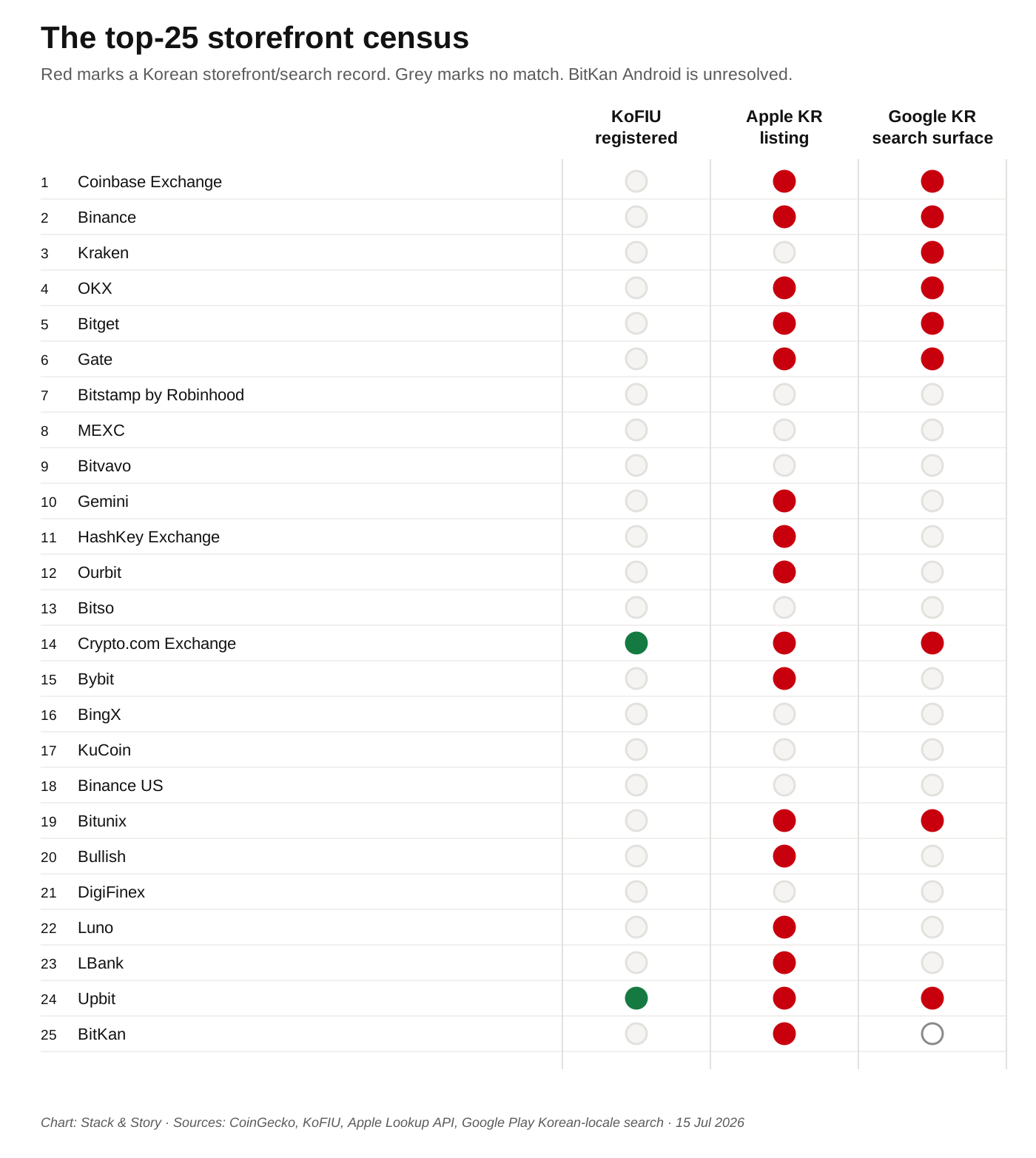
Those results record search output only. A completed Korean download requires a separate account-level test. A Google Play page can return metadata under Korean locale parameters while installation remains unavailable to an account set to Korea. Direct package pages also resolved for 22 of the 23 unregistered exchanges, which is useful for identifying apps and weak for proving distribution. A device test with a Korean Play account is the next step before calling any of these a working download route.
The search traces still matter. Google's policy says unregistered exchange apps should remove Korea from their targeting, and legal analysis published when the rule took effect expected local users to lose search access as well as new downloads. A live-account audit can now focus on seven packages instead of starting with the entire market.
The two stores are enforcing different perimeters
The common version of this story says Korea banned foreign crypto apps. That sentence folds three separate controls into one.
First, KoFIU can identify a foreign provider as an unreported operator when its conduct targets Koreans. It has reported 40 entities to law enforcement since 2022, including KuCoin and MEXC, and asked app stores and network authorities to block access to named services.
Second, Apple has complied with specific blocking requests. The Korean App Store still contains other foreign exchange apps outside the register because the 2025 action did not establish an all-unregistered rule.
Third, Google made registration a publishing condition for any exchange app that targets South Korea. That private platform policy reaches beyond KoFIU's blacklist. It can exclude an app even when the underlying exchange has not been named as an illegal domestic operator.
The practical border therefore sits at the app store, and the border moves by platform. An iPhone user can encounter a listing that an Android developer is formally required to remove from Korean targeting. Both users can still reach exchange websites, and Android users can obtain APK files elsewhere, carrying a higher risk of fake or tampered software.
What the census can and cannot show
This is a storefront audit taken on July 15, 2026. It establishes whether Apple's Korean lookup returned an app record and whether official Android packages appeared in a standardized set of Korean-locale searches. It does not establish that a Korean resident could open a new account, pass identity checks, deposit funds or trade.
The Crypto.com match is at brand level. KoFIU's register contains Crypto.com, while the product and Korean legal-entity scope need confirmation before treating every Crypto.com app as covered by that filing. BitKan's iOS listing returned, but we could not resolve its current official Android package. Rankings and storefronts can change after publication.
The biggest legal caveat is the simplest: registration status and illegal domestic operation are separate tests. A foreign exchange crosses Korea's legal line when it conducts business aimed at Korean users without filing. The app-store rules and the enforcement list use registration in different ways.
That is exactly what the numbers expose. South Korea closed 14 Apple app doors in 2025. The current top-25 census finds 14 other unregistered doors open, while Google's broader registration gate shows a handful of search traces worth testing on a Korean account.
Methodology and sources
The universe is the first 25 exchanges in the CoinGecko exchanges API by trust-score rank on July 15, 2026. Registration status was matched against the KoFIU register dated June 30, 2026. Apple evidence came from the iTunes Lookup API using each official app ID and country=kr. Google evidence came from official Android package IDs, direct detail-page requests and 25 Korean-locale exchange-name searches. The policy baseline comes from Google's developer guidance, the April 2025 FSC notice on Apple blocking, and Bae, Kim & Lee's January 2026 analysis. Download the cleaned census as CSV.