
The stablecoin money is buying the pipes
Velocity raised $38M for stablecoin settlement software, part of a wave of infra rounds. With $226B in B2B stablecoin payments in 2025, the money is buying rails, not new coins.
Velocity raised $38 million in a Series A to build stablecoin settlement and treasury software for banks and enterprises. Dragonfly and FirstMark led the round, with Coinbase Ventures, Ripple, Capital One Ventures, Wintermute Ventures, QED and Activant Capital joining.
What the round funds
Velocity sells the connective software between stablecoin networks and banking, custody, compliance and settlement, and the raise takes its total to roughly $50 million since it started in 2025. It lands in a year of infrastructure rounds: OpenFX pulled $94 million for stablecoin foreign exchange, Trace Finance took $32 million for cross-border settlement, and Tether joined a $5.2 million round for Ark Labs. The demand underneath is measurable volume. McKinsey and Artemis estimated stablecoins settled $390 billion in annualized real-world payments in 2025, about $226 billion of it business-to-business. The Velocity round was reported by Cointelegraph.
The margin is in the rails
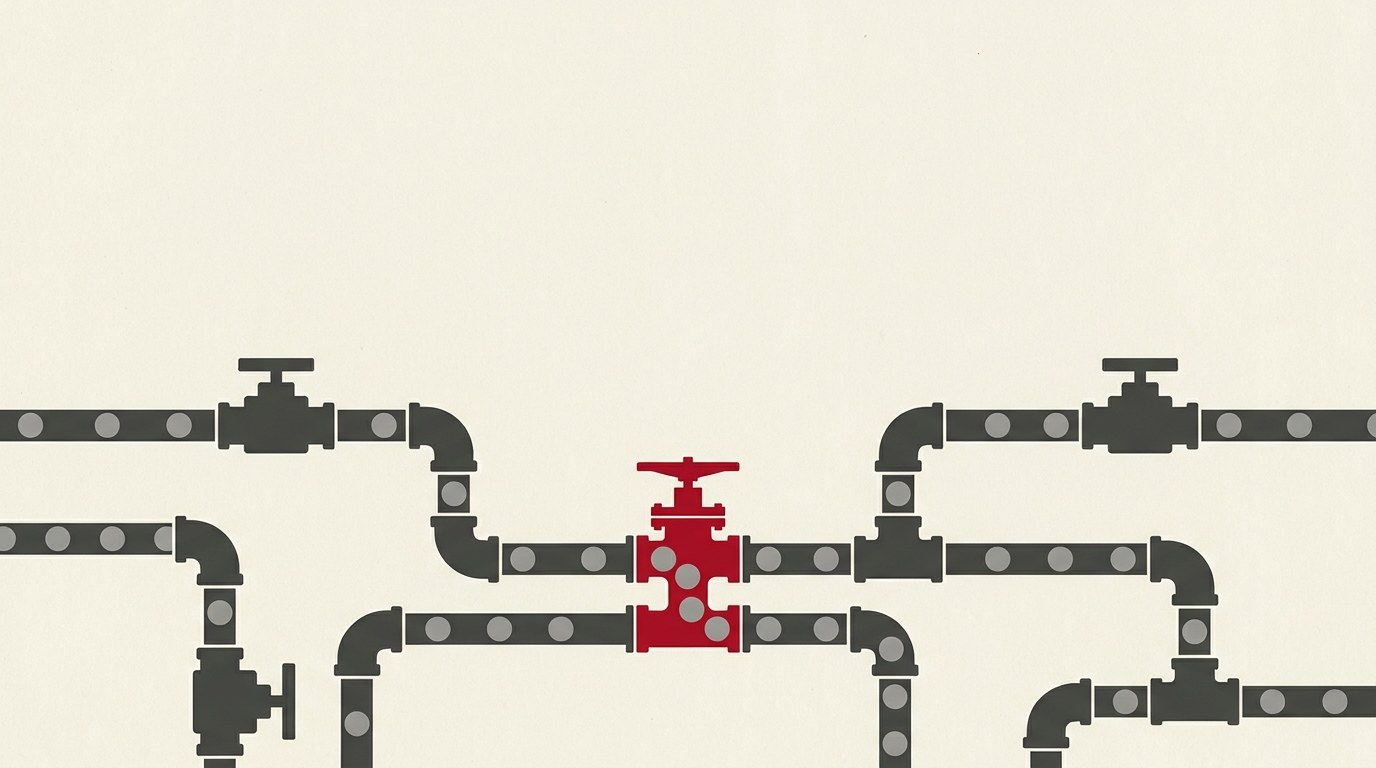
The capital is chasing the pipes. None of these rounds funded another dollar coin; they funded the banking, compliance and settlement layer that moves the coins already in circulation. That is a bet that the margin in stablecoin payments sits in the rails, where a treasury team plugs USDC into the accounts and controls it already runs, and not in the token, which is a commodity two issuers already supply at $73 billion and $184 billion. The backer list makes the point twice. Capital One Ventures, Ripple and Coinbase Ventures are incumbents buying a seat in the plumbing before a card-network stablecoin, June's Open USD, tries to route around them. That token launched with more than 140 backers including Visa, Mastercard, Coinbase and Ripple, which tells you the incumbents intend to own both the coin and the settlement layer if they can.
No new coin in the pitch
The tell is who is absent from the pitch: a new consumer token. Enterprise finance teams do not want another coin to hold. They want fewer wires, faster settlement and a compliance trail their auditors accept, which is the layer these rounds fund. That $226 billion in B2B settlement is about 58% of the $390 billion total, and it is the slice that pays for software rather than speculation. So the money keeps landing on settlement infrastructure while the count of serious dollar stablecoins barely moves, and the firms selling the rails collect a fee on volume the coins only carry.
What to watch
Watch whether independent infrastructure keeps its share of that $226 billion in B2B flow as Open USD scales. If Velocity and its peers keep signing bank customers, the plumbing thesis holds. If OUSD's owners fold settlement into the card networks, the standalone layer gets squeezed into a feature.